Chennai Realty

CALL +91-822-057-5932

2026 - Top locations in India for commercial real estate investing!

India’s commercial real estate market has been seeing strong activity, particularly across major office markets. With GCCs, technology companies, BFSI firms and flexible workspace operators driving demand, different cities offer different opportunities.

Below are some locations worth considering in 2026:

Bengaluru

Bengaluru continues to see strong office demand, supported by technology companies and GCC expansion. It also recorded the highest office leasing share in Q2 2026 among the top eight cities. Growth was largely driven by strong demand from Global Capability Centres (GCCs) and the technology sector.

Mumbai

Mumbai remains a major corporate and financial centre. Office leasing activity was particularly strong in H1 2026, making established business districts and quality office assets an important part of the market. Mumbai saw strong office leasing, driven by BFSI, technology businesses, and expanding Global Capability Centres (GCCs).

Delhi NCR

Delhi NCR has a broad commercial ecosystem covering established office districts as well as Gurugram and Noida. The region continues to attract corporate, technology and GCC occupiers.

Hyderabad

Hyderabad has continued to attract GCCs and technology companies. H1 2026 leasing increased compared with the same period in 2025, while office rents also recorded growth.

Pune

Pune has a diverse office market supported by technology, engineering and manufacturing companies. It was also among the cities contributing significantly to office absorption in H1 2026. Pune's balanced industrial and technology ecosystem continues to secure its position as a powerhouse for top-tier Indian commercial real estate.

Chennai

Chennai has a strong combination of IT, GCC, automotive and engineering activity. It remains one of India's established office and industrial markets, with continued office leasing activity in 2026.

Ahmedabad

Ahmedabad is a smaller office market compared with Bengaluru or Mumbai, but it has been seeing increasing activity and new office supply. Its H1 2026 leasing volume also grew significantly from the previous year, although from a smaller base.

For commercial real estate investing, the city itself is only one part of the equation. Micro-market, tenant demand, vacancy, connectivity, rental levels, asset quality and upcoming infrastructure can make a significant difference.

Posted on 2026-10-04 by chennai — 2 min

OMR Vs ECR - Where to invest?

If you're looking purely from a long-term appreciation angle (not rental or flipping), then the decision between OMR apartments vs ECR villas comes down to one simple thing: what actually appreciates in Chennai over time. Based on certain aspects:

OMR apartments

  • Very liquid, easy to sell anytime
  • Strong rental demand (IT crowd)
  • Appreciation gets capped because of oversupply
  • Buildings depreciate over time, so land component is limited

ECR villas

  • Better land value component
  • Scarcity factor helps long-term
  • But resale can be slow (limited buyer pool)
  • Also depends heavily on exact micro-location (flood risk, access, etc.)

If your goal is steady + safe, OMR apartments are fine If your goal is better appreciation, ECR villas are slightly better

The bigger opportunity right now isn’t either of these. Most long-term upside in Chennai is shifting towards:

  • Oragadam / Sriperumbudur (industrial growth) ORR belt
  • Kelambakkam–Vandalur stretch GST Road side

These areas are still developing, which is exactly why they have higher upside over 5–10 years. Simple way to think about it:

  • Apartments = stability + liquidity Villas = lifestyle + moderate appreciation
  • Land (growth corridors) = highest appreciation (if you
    can wait)

If you have ₹1.5Cr and a long horizon, personally wouldn’t put everything into a single apartment or villa. You could probably split: One stable asset (OMR or similar) One high-growth bet (plot in developing corridor)

That way you’re not depending on just one outcome. End of the day, Chennai doesn’t reward “safe-looking” investments the most. It rewards early positioning near future infrastructure. That’s where the real gains usually come from.

Good luck investing!

Posted on 2026-10-04 by chennai — 2 min

Buying an apartment in Chennai?

Location & connectivity – Metro/train access, road connectivity, flood history, future infrastructure and neighbourhood development.

Project approval & documentation – RERA, CMDA/DTCP approval, land title, sanctioned plan, UDS, construction agreement and promised specifications.

Actual construction quality – Visit completed projects by the same developer and speak directly to existing residents. This is far more useful than Google reviews alone.

Density & design – Number of units, lifts, parking, ventilation, setbacks, common areas and how practical the floor plans are.Builder’s track record for that specific project type – A reputed brand doesn’t automatically mean every project is equally good.

Maintenance after handover – Ask residents about monthly maintenance, association issues, water, power backup, lifts and facility management.

Total cost – Don’t compare only the advertised ₹/sq.ft. Include parking, floor-rise, clubhouse, corpus, GST, registration, maintenance deposits and other charges.One more thing, if first-time buyers knew: you’re not really buying the builder’s brand; you’re buying a particular piece of land, a particular building, and a particular set of legal documents.So rather than asking “Which builder is best?”, you could ask “Which specific project gives me the best combination of location, legal clarity, construction quality, design and long-term livability?”

Thanks for reading!

Posted on 2026-10-04 by chennai — 2 min

Chennai's property market isn't just about houses! 2026 trends for property buyers

Chennai's property story isn't just about houses. The city's office market has also remained significant, with Chennai among the Indian cities crossing the 10-million-square-foot mark in annual office transactions in recent market reporting. Office growth creates a ripple effect. More offices mean more employees. More employees mean more demand for homes. And more residents mean more demand for restaurants, shops, schools, healthcare, transportation and everyday services. That is how a real estate corridor becomes a neighbourhood.

What Are Chennai Homebuyers Looking For in 2026? Today's buyer is doing considerably more homework before signing on the dotted line. Some of the biggest considerations include: • Connectivity to workplaces • Metro and public transport access • Schools and hospitals nearby • Developer reputation • RERA registration and approvals • Construction quality • Amenities and maintenance • Water availability • Parking • Future infrastructure • Resale potential • Overall neighbourhood development

Price still matters, of course. But "cheap" is no longer enough. Buyers increasingly want a property that makes sense both today and several years from now.

Are Chennai Property Prices Still Rising? The Chennai market has generally remained resilient, although growth is not uniform across every neighbourhood. Recent 2026 reporting shows that Chennai's housing market has experienced some moderation in sales volumes compared with the previous year, while analysts continue to describe the city's market as largely end-user driven rather than heavily speculative. This is important.

Real estate is not one giant Chennai market. A property near a major employment hub, metro station or established neighbourhood can behave very differently from a property in a distant peripheral location. So instead of asking: "Will Chennai property prices go up?" A better question is: "Which Chennai locations have the fundamentals to support future demand?"

Technology Is Changing How Chennai Property Is Bought The traditional property hunt is changing. Buyers increasingly begin their search online, compare multiple properties, check locations on maps, look at photographs and videos, compare prices and contact agents or owners digitally. Virtual tours, online listings, digital documentation and increasingly sophisticated property-search platforms are making the process more convenient. For sellers, this means one thing: A property needs to look good online before someone ever visits it offline.

What Could Shape Chennai Real Estate in the Coming Years? Several factors could influence the city's property market: Metro Expansion Better public transport can change the attractiveness of entire neighbourhoods by reducing commuting friction. Employment Growth IT, automobile, electronics, manufacturing, logistics and other industries will continue to influence where housing demand develops.

Suburban Expansion As central Chennai becomes more expensive and space becomes limited, residential development will continue moving toward peripheral and suburban locations. Better Connectivity Road, rail, airport and public transport improvements can make previously distant areas more accessible. Changing Buyer Preferences Homebuyers increasingly want a combination of affordability, convenience, lifestyle amenities and connectivity rather than simply the largest house they can afford.

What Are the Challenges? Chennai real estate isn't without its challenges. Buyers should pay particular attention to: • Flood and waterlogging risk • Water availability • Land and title documentation • Planning approvals • Project delays • Maintenance costs • Infrastructure that is promised but not yet delivered • Oversupply in individual micro-markets • Affordability

Location research is therefore extremely important. A property can look like a bargain until you discover that the "10-minute drive" to the main road is actually a 35-minute adventure during peak traffic.

The Chennai Real Estate Outlook Chennai's real estate market is becoming increasingly diverse. The city centre remains valuable because of established infrastructure and amenities. Meanwhile, OMR, GST Road, Porur, western Chennai and other growth corridors continue to develop as employment, transportation and residential expansion move outward. Recent research also indicates that Chennai has a strong underlying homeownership sentiment: Knight Frank's 2025 homebuyer survey found that 86% of Chennai respondents preferred owning a home rather than renting, the highest figure among the eight cities surveyed.

The bigger story is therefore not simply rising property prices. It is the continuous expansion and restructuring of Chennai itself. New roads create new corridors. New offices create new housing demand. New metro connectivity makes previously distant neighbourhoods more accessible. And new residential communities create entirely new urban ecosystems. For buyers, investors, developers and real estate professionals, understanding these changes is becoming increasingly important.

Chennai isn't standing still. Neither is its real estate market.
Posted on 2026-10-04 by chennai — 4 min

Chennai Real Estate - Macro Trends!

Apartments Continue to Dominate Apartments remain a major part of Chennai's residential market, particularly in developing suburban corridors. Gated communities are especially attractive to families because they combine security, amenities, parking and community facilities.

Swimming pools, gyms, children's play areas, landscaped spaces and clubhouses are increasingly becoming standard features rather than extravagant extras.

Villas and Independent Homes There is also continuing demand for villas and independent houses, particularly among families looking for more space and privacy. This demand is particularly relevant in the expanding suburbs where larger plots are more available than in central Chennai.

Plots and Land Land remains an important part of the Chennai real estate story. Buyers looking for long-term ownership often consider plotted developments in areas where roads, employment centres and other infrastructure are expanding. But with land, due diligence matters even more. Title verification, approvals, access roads and applicable planning regulations should be checked carefully before purchasing.

Posted on 2026-10-04 by chennai — 1 min

What Are the Market Trends in Chennai Real Estate?

Chennai's real estate market is changing fast. From the established neighbourhoods of Anna Nagar and Adyar to the fast-growing corridors of OMR, Porur, Pallavaram and GST Road, the city continues to expand in different directions. Chennai's strong IT, automobile, manufacturing and services sectors, combined with improving infrastructure and growing connectivity, continue to support demand for homes and commercial properties. At the same time, today's buyers are becoming more selective about location, amenities, connectivity and long-term value. So, what is actually happening in the Chennai property market? Let's take a look.

What Is Driving Chennai's Real Estate Market? 1. Infrastructure Is Reshaping the City Infrastructure is one of the biggest forces behind Chennai's property market. Metro expansion, road improvements, the Outer Ring Road and better connections between residential and employment hubs are gradually changing the way people choose where to live. Areas that were once considered "too far away" can become much more attractive when commuting becomes easier. For property buyers, the lesson is simple: don't just look at today's neighbourhood — look at where connectivity is heading. 2. Chennai's IT and Industrial Economy Keeps Creating Housing Demand Chennai isn't dependent on just one industry. The city has a large presence of IT and IT-enabled services, automobile manufacturing, electronics, healthcare, logistics and other industries. These employment centres create continuous demand for housing. The IT corridors around OMR and other employment hubs have played an important role in the growth of residential communities, while industrial and logistics activity supports housing demand in several suburban areas. This is one reason Chennai continues to attract both homebuyers and developers.

Which Areas of Chennai Are Seeing Strong Interest?

Different parts of Chennai appeal to different types of buyers.

OMR – The IT Corridor Old Mahabalipuram Road remains one of Chennai's most important residential and commercial growth corridors. The presence of IT companies, educational institutions, apartment communities and improving connectivity has helped create a large residential ecosystem along OMR. Areas such as Sholinganallur, Navalur and Kelambakkam continue to attract buyers looking for relatively modern housing communities and access to employment hubs.

Porur – The Western Growth Story Porur has become an important residential destination because of its connectivity to several major parts of Chennai. Its proximity to employment centres, roads connecting western Chennai and established social infrastructure have made the area attractive to both end-users and investors.

GST Road & South Chennai The GST Road corridor has become another major development belt. Pallavaram, Chromepet, Tambaram and surrounding areas benefit from established transport infrastructure and access to employment, education and commercial centres. As Chennai expands southwards, these locations continue to attract residential development.

North Chennai – An Emerging Story North Chennai is also worth watching. Industrial development, logistics, port-related activity and major infrastructure projects are gradually changing the economic landscape of the northern parts of the metropolitan region. Areas with improving connectivity and employment opportunities could see greater residential interest as the city continues to expand.

Established Chennai And then there are the classics. Anna Nagar, Adyar, Besant Nagar, T. Nagar, Mylapore and other established neighbourhoods continue to command attention because of their mature infrastructure, schools, hospitals, retail, transportation and overall convenience. The newer suburbs may offer more space.

Posted on 2026-10-04 by chennai — 3 min

Why Invest in Chennai Property?

Chennai has emerged as one of the most promising real estate markets in South India. With its unique combination of traditional charm and modern development, the city offers exceptional opportunities for both residential and commercial property investment.

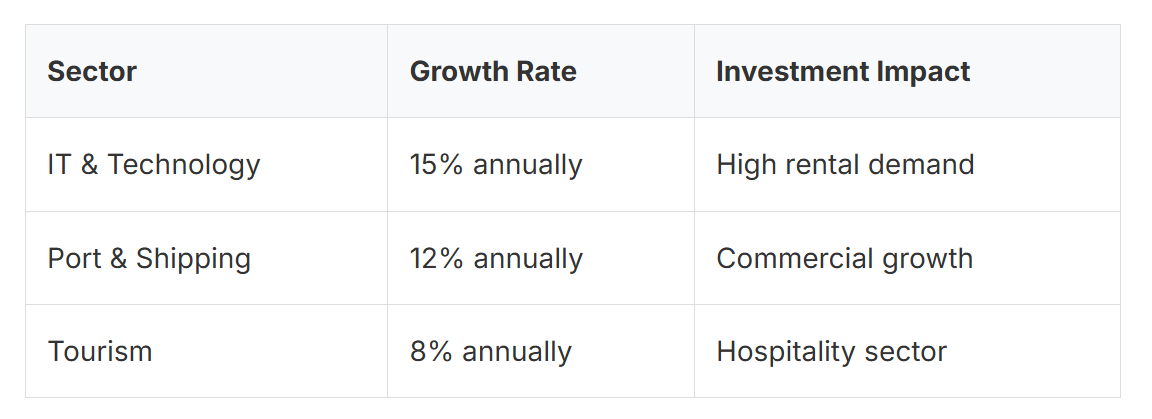
Property Appreciation Trends • Metro Rail: Phase 1 operational, Phase 2 under construction • Airport Expansion: International Airport - India's best airport • Road Network: NH expansion, improved connectivity • Port Facilities: Deep-water port with container terminal • Digital Infrastructure: High-speed internet, smart city initiatives

enter image description here

Investment Benefits • High ROI: Average 12-15% annual returns • Rental Yield: 6-8% rental yield in prime areas • Capital Appreciation: Consistent 15-20% annual growth • Liquidity: Active secondary market • Tax Benefits: Home loan interest deductions

Lifestyle Advantages • Cultural Heritage: Rich history and multicultural environment • Natural Beauty: Backwaters, beaches, and green spaces • Modern Amenities: Shopping malls, restaurants, entertainment • Healthcare: World-class medical facilities • Education: Renowned schools and colleges

Why Chennai is the Perfect Investment Choice Chennai offers the perfect blend of heritage charm and modern development. Chennai has several infrastructure advantages. The city's strategic location, excellent infrastructure, and growing economy make it an ideal destination for property investment in South India.

Posted on 2026-10-04 by chennai — 1 min

Demand for Residential and Commercial Real Estate in Chennai

Chennai's real estate market is experiencing robust demand across both residential and commercial sectors, driven by multiple factors including economic growth, infrastructure development, and demographic changes.

Residential Real Estate Demand in Chennai

Growing Urban Population Chennai's urban population is steadily increasing, creating strong demand for residential properties in major cities. The state's high literacy rate and quality of life attract professionals and families seeking better opportunities.

NRI Investment Trends Non-Resident Indians (NRIs) continue to be major contributors to Chennai's residential real estate market. With over 2.5 million Chennaites working abroad, NRI investments account for approximately 40% of high-end residential property purchases in the state.

Affordable Housing Demand The government's focus on affordable housing schemes has created significant demand for budget-friendly residential units. Chennai are seeing increased demand for apartments and villas in the ₹70-90 lakh range. Commercial Real Estate Demand in Chennai

IT Sector Growth Chennai's IT sector is expanding rapidly, with major IT parks are driving demand for commercial office spaces. The state's focus on digital infrastructure and startup ecosystem has attracted both domestic and international companies.

Retail and Hospitality The tourism industry's growth has increased demand for retail spaces, hotels, and hospitality properties. Tourist destinations are seeing significant commercial real estate development.

Healthcare and Education Chennai's reputation for quality healthcare and education has created demand for medical facilities, educational institutions, and related commercial properties. The state's healthcare tourism sector is particularly strong.

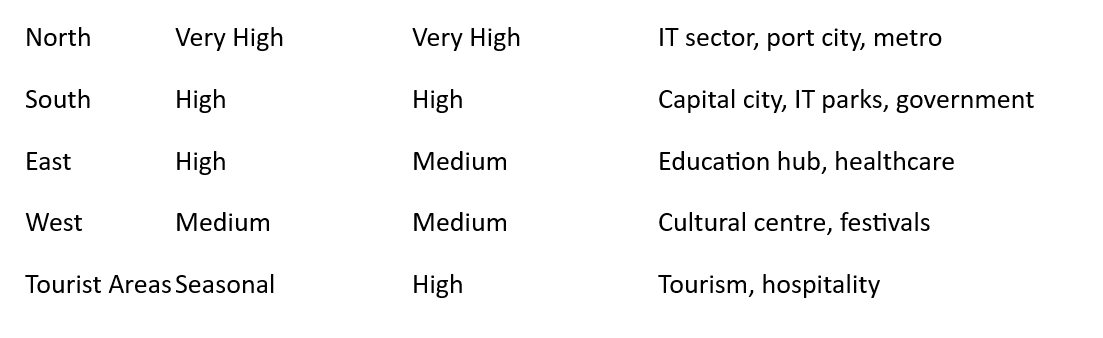
Regional Demand Variations

enter image description here

Market Trends and Future Outlook Current Market Conditions • Residential: Steady demand with 8-12% annual price appreciation • Commercial: Growing demand for Grade A office spaces • Retail: Increased demand for shopping malls and retail outlets • Hospitality: Strong demand for hotels and resorts Future Projections Chennai's real estate demand is expected to remain strong over the next 5-10 years due to: • Continued infrastructure development • Growing IT and startup ecosystem • Tourism sector expansion • NRI investment trends • Government initiatives for affordable housing Investment Opportunities High-Demand Areas Investors should focus on areas with: • Upcoming infrastructure projects • Good connectivity to major cities • Presence of educational and healthcare institutions • Tourist attractions and natural beauty Property Types in Demand • Residential: Apartments, villas, and independent houses • Commercial: Office spaces, retail outlets, and warehouses • Hospitality: Hotels, resorts, and serviced apartments • Specialized: Medical facilities and educational institutions

Conclusion Chennai's real estate market shows strong and diversified demand across residential and commercial sectors. The state's unique combination of natural beauty, economic growth, and quality infrastructure makes it an attractive destination for both domestic and international investors. With continued government support and private sector investment, Chennai's real estate market is poised for sustained growth in the coming years.

Posted on 2026-10-04 by chennai — 3 min

Chennai for land investment?

Upcomming developing areas 1. Tambaram Belt - East Tambaram (5k to 8K) 2. West Tambaram - 3.5K to 6K 3. Redhills (3.5k) 4. Urapakkam & Guduvanchery - 4.5K to 6K

Proven Developed Area (if you have budget you can invest, sure growth will be there) 1. Ambattur 2. Pallavaram / Zamin Pallavaram / Thirumudivakkam 3. Nanganallur / Madipakkam /Adambakkam

Only for long term investment 1. Thaiyur (Interior Thaiyur, Backside of new IIT campus) 2. Thiruporur stretch (thiruporur to wonderla (kattur) 3. Pattabiram & vepambattu 4. Mahindra city Opp area - chettipuniyam 5. Orathur (Interior part of padappai)

Posted on 2026-10-04 by chennai — 1 min

What is the Average Rental Yield in Chennai Real Estate?

Chennai offers attractive rental yields ranging from 4-7% annually across different property types and locations, with commercial properties and tourist destinations showing higher returns compared to traditional residential rentals.

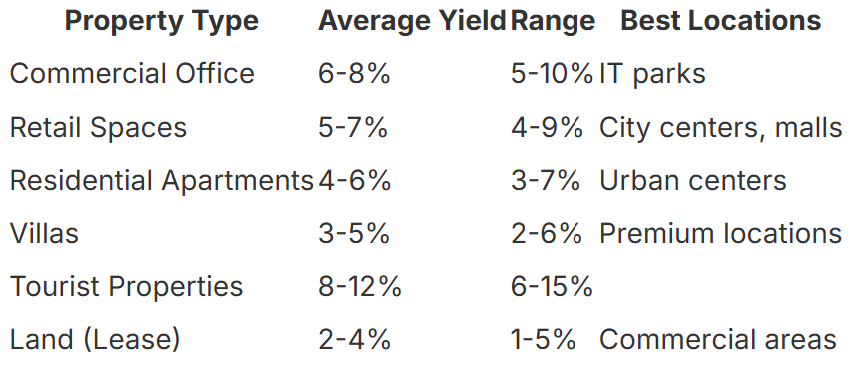
Average Rental Yields by Property Type

enter image description here

City-wise Rental Yield Analysis

Commercial Properties: 6-8% annual yield IT Corridor Offices: 7-9% annual yield Residential Apartments: 4-6% annual yield Retail Spaces: 5-7% annual yield Chennai - Steady Returns Chennai offers consistent rental yields:

Government Area Offices: 5-7% annual yield IT Park Properties: 6-8% annual yield Residential Properties: 3-5% annual yield Educational Hub Rentals: 4-6% annual yield Tourist Destinations - Seasonal Highs Tourist areas show the highest yields during peak seasons:

North: 8-12% (seasonal), 4-6% (annual average) South: 10-15% (seasonal), 5-7% (annual average) East: 6-10% (seasonal), 3-5% (annual average) Factors Affecting Rental Yields

Location Factors Proximity to Business Centers: Higher yields in commercial areas Transportation Connectivity: Metro and airport proximity increases yields Educational Institutions: Student rental demand boosts yields Healthcare Facilities: Medical tourism areas show higher yields

Property Characteristics Property Age: Newer properties command higher rents Amenities: Modern amenities increase rental potential Size and Layout: Optimally sized properties yield better returns Maintenance Quality: Well-maintained properties attract higher rents Rental Yield Calculation Methods Gross Rental Yield Formula: (Annual Rental Income / Property Value) × 100

Example: Property worth ₹50 lakh generating ₹3 lakh annual rent = 6% gross yield

Net Rental Yield Formula: ((Annual Rental Income - Annual Expenses) / Property Value) × 100

Expenses include: maintenance, property tax, insurance, management fees

High-Yield Investment Strategies Commercial Real Estate IT Park Offices: Long-term leases with corporate tenants Retail Spaces: Prime location shops and showrooms Warehouses: Industrial area storage facilities Co-working Spaces: Flexible office solutions Residential Strategies Student Housing: Near educational institutions Corporate Housing: Furnished apartments for professionals Tourist Rentals: Short-term vacation rentals Senior Living: Healthcare-focused residential properties Rental Market Trends

Growing Demand Areas IT Corridors: Increasing corporate rental demand Educational Hubs: Student accommodation needs Medical Tourism: Healthcare-related rentals Startup Ecosystems: Flexible office space demand Rental Rate Trends Commercial: 8-12% annual increase Residential: 5-8% annual increase Tourist Properties: 10-15% seasonal variations Investment Tips for Higher Yields Property Selection Choose properties in high-demand areas Focus on properties with good rental potential Consider properties near upcoming infrastructure Evaluate properties with multiple use options Management Strategies Professional property management Regular maintenance and upgrades Long-term tenant relationships Flexible rental terms Tax Implications Rental Income Taxation Residential: Standard tax rates apply Commercial: Business income taxation Deductions: Maintenance, repairs, interest on loans TDS: Applicable for high-value rentals Future Outlook Expected Yield Trends Rental yields in Chennai are expected to remain stable or improve due to:

Growing demand for quality rental properties Infrastructure development increasing property values Economic growth driving rental demand Tourism sector recovery

Conclusion Chennai's real estate market offers competitive rental yields across different property types and locations. Commercial properties and tourist destinations provide the highest returns, while residential properties offer stable, long-term rental income. Investors should focus on high-demand areas with good connectivity and amenities to maximize rental yields. With Chennai's growing economy and infrastructure development, rental yields are expected to remain attractive for investors seeking steady income from real estate investments.

Posted on 2026-10-04 by chennai — 3 min

Hello, world!

ChennaiRealty is a group website operated by OpenRealty, a product of CandyMetrics P. Ltd. Thanks for reading!

Posted on 2026-10-04 by chennai — 1 min